The US government’s latest attempt to fix fragmented medical records now has heavyweight support. Apple, Google, and OpenAI have signed a voluntary agreement with the Centers for Medicare and Medicaid Services (CMS) to make patient health information easier to share across hospitals, clinics, and consumer apps. The move is part of a broader “health data partnership” that also includes Amazon, Anthropic, more than 60 other companies, and 11 health systems.
For years, electronic health records have lived in silos, forcing patients to juggle portals and paperwork. CMS is attacking that problem on two fronts: standardizing how providers exchange data and encouraging developers to build apps that sit on top of those standards. By bringing tech giants with proven cloud and AI chops into the fold, regulators hope to accelerate both goals and deliver practical tools for weight-management, diabetes care, appointment scheduling, and symptom checking.
What’s new in the health data partnership
-
Unified data format
A single set of APIs will let any trusted app pull records once the patient gives consent, whether the data lives in a hospital database or a pharmacy’s system. -
AI-powered consumer apps
Companies plan to launch assistants that can summarise lab results, suggest follow-up tests, and automate insurance paperwork. -
Wider provider access
Participating health systems will test the standards first, making it easier for seniors to enroll in Medicare plans or switch doctors without repeating forms. -
Tight delivery timeline
Signatories must show measurable progress by the first quarter of 2026, when CMS will publish a scorecard tracking adoption. -
Strong privacy guardrails
Patient consent remains mandatory, and Apple’s on-device processing plus OpenAI’s opt-in data controls are expected to limit exposure of sensitive records.
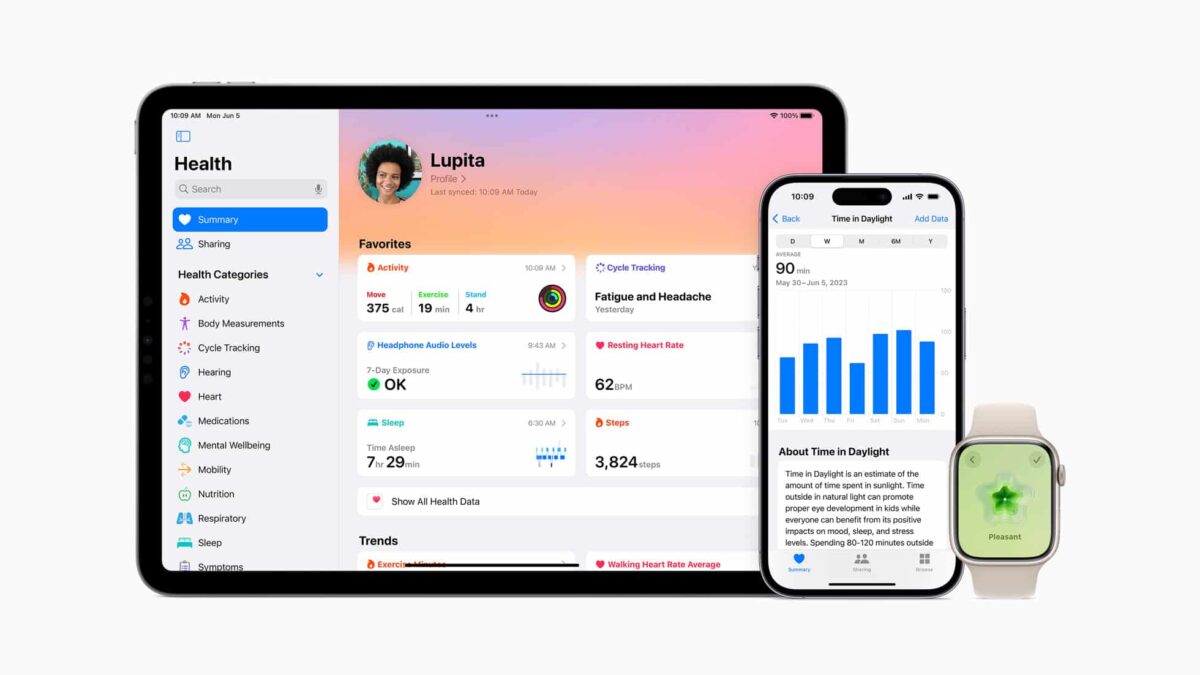
Apple’s HealthKit already aggregates data from iPhones and Apple Watch, but its reach ends when hospitals use incompatible record systems. Google’s cloud division powers back ends for major providers, while OpenAI’s GPT models can translate medical jargon into plain language. Pooling those capabilities could finally let a parent view vaccination history, prescription refills, and fitness metrics in one dashboard instead of three.
CMS will release draft technical standards in August, kick-off pilot integrations this autumn, and host a public demo day in January 2026. Early adopters include Noom for weight loss tracking and several unnamed telehealth startups. If the project keeps momentum, everyday patients could start benefiting from unified records long before the 2026 deadline.
Still, the partnership is voluntary. Companies that miss targets face public scrutiny rather than fines, and privacy advocates warn that any large-scale data push must guard against misuse. For now, though, the collaboration marks the strongest federal-industry alignment on health records since the initial push to digitize paper charts a decade ago.
via Bloomberg

