Apple’s executives have finally explained why the MacBook Pro is getting a touchscreen, and the reason comes down to a long-standing concern: adding touch shouldn’t make the laptop heavier or thicker. Apple announced the touchscreen MacBook Pro after more than a decade of arguing that the Mac did not need a touchscreen.
John Ternus, who became Apple’s CEO on September 1, said the company waited until touch could be added without “making the product lesser in any way.” That explains why Apple held off for so long, but it doesn’t mean every Mac will get a touchscreen. Apple hasn’t said whether touch will come to the MacBook Air or iMac, and Ternus declined to discuss future products.
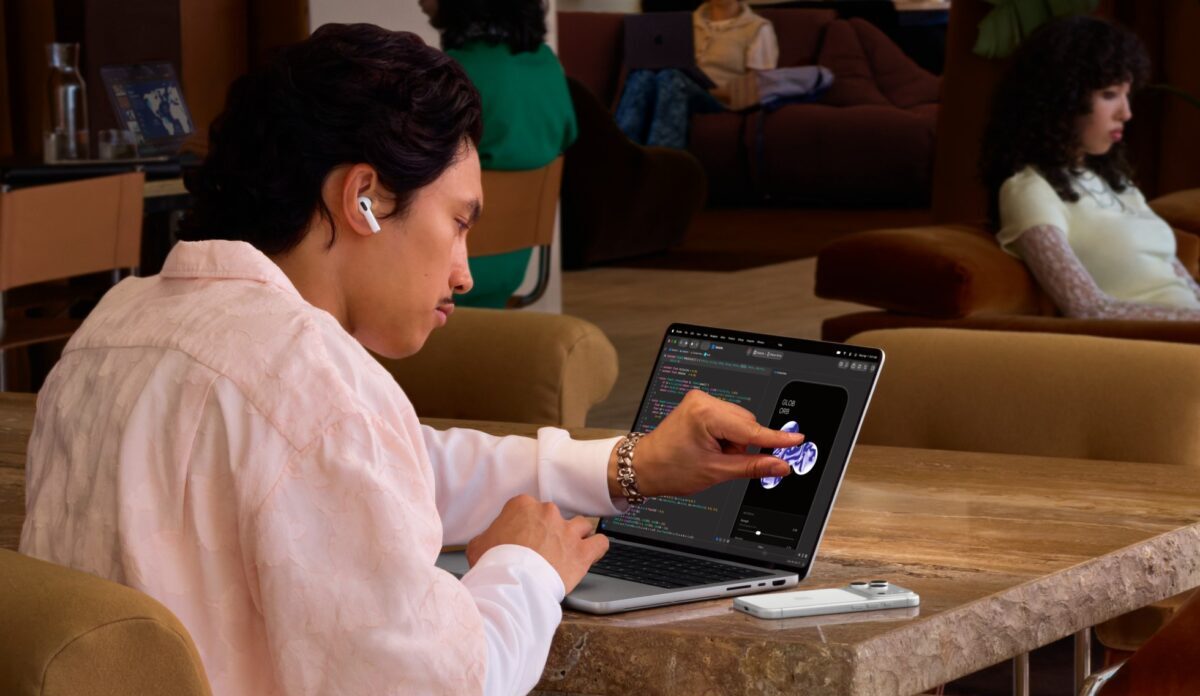
Why Apple added touch to the MacBook Pro now
Before getting into the software changes, there’s a practical reason Apple says touch is finally possible without compromising the MacBook Pro. The new 14-inch model weighs 3 pounds, half a pound less than before, while the 16-inch model weighs 4 pounds, down by 0.7 pounds. Both are also thinner, by half a millimeter on the 14-inch model and nearly a millimeter on the 16-inch model.
Johny Srouji, Apple’s chief hardware officer, credited a decade of progress in display technology and custom silicon. Touch also required a redesigned hinge to keep the screen steady when you tap it. Rather than adding a separate layer on top, Apple built the touch sensor into the display panel to reduce latency, according to Apple’s announcement.
The other challenge was making touch comfortable to use on a Mac. In 2015, Phil Schiller argued that reaching up to touch a desktop screen was uncomfortable with a fixed keyboard. A year later, he said the menu bar would need to be redesigned for fingers. In 2021, Ternus reiterated that the Mac was built around indirect input, such as a keyboard and trackpad. Apple has now addressed those concerns without abandoning the controls Mac users already know.
Touch costs $400 and stays on the Pro for now
Apple’s approach is to make macOS easier to use with fingers while keeping the keyboard and trackpad in place. In demonstrations shown to the press, menu bar items expand when a finger moves over them, and the traffic-light window buttons grow when touched. macOS also translates taps into clicks, allowing many existing apps to work with touch from day one.
That convenience comes at a premium. The 14-inch touchscreen MacBook Pro starts at $2,899, while the 16-inch model starts at $3,399 with M5 Pro. Both cost $400 more than their non-touchscreen counterparts, which start at $2,499 and $2,999, respectively. Greg Joswiak, Apple’s senior vice president of worldwide marketing, said touch was overdue for pro users, many of whom already own an iPad and an iPhone.
Not every new MacBook Pro includes a touchscreen. The 14-inch MacBook Pro with M6 starts at $1,999 and retains the Liquid Retina XDR display. Pre-orders for the touchscreen models opened October 28, with deliveries scheduled to begin Friday, November 6.
(via WIRED)


