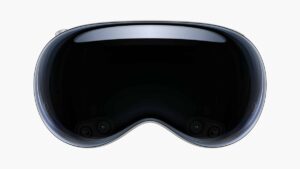
Apple has laid off employees from its Siri, Vision Pro Gaming and Immersive Video teams as the company realigns its priorities to match how users actually use the devices, as per a report by Bloomberg. Gaming and Immersive Video are two of the showcase features of Vision Pro, so gutting these teams means that Apple does not see much value coming out of them, however, the company is not entirely giving up on these features either.
The company has laid off approximately 100 people from its Vision Products Group, while an additional 100 people are being laid off from Siri team. The Siri team is seeing roles being eliminated while newer ones will be created as part of the restructure, to better meet the needs of the new Siri AI architecture.

Apple gave the below statement to Bloomberg:
While we will create new roles as part of this change, it will also impact a limited number of existing roles. We are grateful to these team members for their contributions, and we are committed to supporting them throughout their transition, including opportunities to apply for other roles at Apple.
Apple has also told its employees that visionOS is here to stay and the layoffs are going “to evolve our business to deliver the best experiences for our users.”
The Vision Pro’s commercial collapse
The Vision Pro has sold fewer than 600,000 units since launch and experienced unusually high return rates compared to any other modern Apple product. The M5 refresh in October 2025 added a 120Hz refresh rate, 10 percent more rendered pixels, and around 30 additional minutes of battery life, but the starting price remained at $3,499, then rose to $3,699. The improvements failed to change the market’s verdict. Apple has since discontinued accessories and wound down active promotion of the headset, even as it continues to support visionOS in software updates.
Mike Rockwell, who led the Vision Products Group, was reassigned more than a year ago to oversee Apple’s Siri overhaul as the company attempted to infuse the voice assistant with generative AI capabilities. That move signaled Apple’s internal acknowledgment that the spatial computing bet had not landed as intended. Paul Meade, who oversaw development of both the Vision Pro and smart glasses, departed for OpenAI, with product design head Fletcher Rothkopf assuming his responsibilities.
Smart glasses now the priority
Apple’s spatial computing ambitions are now centered on AI-powered smart glasses rather than head-mounted displays. The first model will rely on cameras, Siri, and Visual Intelligence rather than an AR display. Apple had hoped to unveil the glasses in 2026 and launch them in early 2027, but has pushed the timeline back to WWDC 2027, with a market launch expected later that same year.
The delay stems partly from Apple rethinking privacy-related aspects of the product amid growing backlash against Meta’s AI glasses, which have faced criticism for their integrated cameras and data collection practices. The shift reflects Apple’s strategy to differentiate its spatial wearables through privacy-first design, even if that means a later arrival to market. Apple remains committed to visionOS and its broader spatial-computing ambitions, despite deprioritizing major new enclosed headsets.