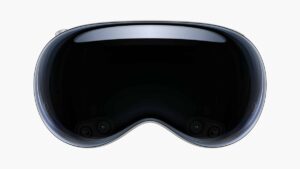
Apple laid off at least 60 employees tied to the Vision Products Group, dismantling the team dedicated to virtual reality development and effectively ending any prospect of Vision Pro successor hardware. The layoffs follow the departure of Paul Meade, who led Vision Pro and smart glasses development, to OpenAI’s hardware unit in late June, and represent the most visible consequence of incoming CEO John Ternus’s decision to eliminate a second-generation Vision Pro and the planned lower-cost Vision Air from Apple’s roadmap entirely.
As per a report by AppleInsider, the Vision Products Group was broken up months ago, with staff redistributed from a single hardware-and-software entity into Apple’s larger engineering organizations. That structural change, combined with leadership departures and now mass layoffs, signals an organizational collapse rather than a course correction. Mike Rockwell, who created the Vision Pro and led the division before being reassigned to the Siri revamp more than a year ago, had privately expressed reservations about his future at Apple and considered leaving the company or stepping back into a smaller role.

What Vision Hardware Remains in Development
Apple has narrowed its spatial computing ambitions to two devices, both smart glasses rather than enclosed headsets. The company is developing AI-powered smart glasses expected to launch in 2027, relying on cameras, Siri, and Visual Intelligence rather than a display, with display-equipped AR glasses following by 2029 at earliest. No other Vision hardware projects remain active.
The Vision Pro’s Troubled Sales History
The Vision Pro launched in February 2024 at $3,499 as Apple’s flagship spatial computing device. The device received an M5 chip upgrade in October 2025 at $3,499, then was raised to $3,699 in June 2026 due to memory constraints. Despite continuous software updates and enterprise adoption claims, the device achieved approximately 600,000 total units sold and showed an unusually high return rate exceeding any other modern Apple product. Enthusiasm cooled far faster than Apple’s original multi-year roadmap had anticipated.
New CEO’s Priorities
John Ternus, who officially becomes CEO on September 1, 2026, nixed plans for Vision Pro successors before taking office, effectively signaling that the Vision Pro will remain a static product with software updates but no hardware evolution. Apple says it remains committed to visionOS and spatial computing ambitions in principle, but the company is deprioritizing major new enclosed headsets in favor of other AI wearables. The timing, layoffs just days before Ternus’s official start, suggests he is consolidating organizational control by removing the old Vision leadership structure beforehand.
The pattern of departures and reductions, Rockwell’s public unhappiness, Meade’s defection to a rival, now mass layoffs, indicates that the Vision division became a dead-end for ambitious engineers within Apple’s structure. For a company that typically enters hardware categories late and redefines them, the shift to lightweight AI glasses mirrors Meta’s successful Ray-Bans strategy rather than Apple’s own playbook. The Vision Pro will receive ongoing software support, yet Apple is no longer building the future around it.



2 comments