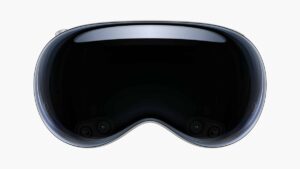
The first peer-reviewed study to directly measure Apple Vision Pro’s impact on surgical speed has found that procedures are completed approximately 19% faster when surgeons use the headset compared to conventional setups, according to a report by iPhone in Canada. The finding adds a concrete operational metric to a body of clinical evidence that had previously focused on safety, ergonomics, and collaboration.

Horace Dediu, writing at Asymco, frames the result as evidence of a platform shift rather than an incremental tool improvement, noting that a 19% reduction in procedure time is the kind of outcome that compels institutional adoption independent of any enthusiasm for the underlying hardware. In surgical settings, where operating room time is a scarce and expensive resource, that margin has direct budget implications.
The efficiency result follows a July 2025 peer-reviewed study covering 22 laparoscopic gastrointestinal surgery cases at China-Japan Union Hospital, which recorded an average operation time of 189 minutes, with all patients completing their procedures without complications and recovering smoothly afterward. That study concluded that Vision Pro is safe and effective in laparoscopic surgery and has the potential to provide surgeons with a more precise and safer operative environment, but it did not benchmark speed against a control group. The new study fills that gap directly.
Surgeons at UC San Diego had performed more than 20 minimally invasive operations wearing Vision Pro headsets as of October 2024, with the device’s high-resolution OLED displays described as “better than we even expected” compared to earlier headsets like Google Glass and Microsoft HoloLens. Santiago Horgan, director of the Center for Future Surgery at UCSD, suggested Vision Pro could prove “more transformative” than the robotic devices already used to assist in surgeries.
The strongest example of sustained clinical adoption comes from Dr. Eric Rosenberg of SightMD in New York, who performed the first Vision Pro-assisted Apple Vision Pro cataract surgery in October 2025 and has since completed hundreds of additional cases using ScopeXR, a surgical platform he co-developed. ScopeXR streams live feeds from 3D digital surgical microscopes directly into the Vision Pro headset, allowing the surgeon to view the operative field in stereoscopic 3D while overlaying preoperative diagnostic data in the same visual space.
One practical benefit the 19% speed figure may partly reflect is what Vision Pro solves ergonomically. During laparoscopic procedures, surgeons traditionally watch a nearby external monitor while operating on the patient, a posture that involves sustained neck rotation and repetitive strain. Vision Pro puts the video feed directly in the surgeon’s line of sight, eliminating that compromise and allowing more natural, efficient movement throughout a procedure.
ScopeXR also supports real-time remote collaboration, allowing a second surgeon to virtually join a procedure and see exactly what the operating surgeon sees. That capability has direct implications for hospitals in rural or underserved areas that lack access to subspecialty expertise, and it goes meaningfully beyond what any flat-screen teleconferencing setup can offer. Apple has been pursuing a parallel track with its AI smart glasses health platform, suggesting the company sees spatial computing and health as a long-term pairing.