Apple isn’t walking away from the Vision Pro, even as adoption remains slow and sales are estimated to be under one million units since launch. On the company’s Q3 earnings call, CEO Tim Cook made it clear that spatial computing is still a priority. “I was thrilled with the release from the team on visionOS 26,” he said. “It includes many things in it, like Spatial Widgets to enable users to customize their digital space. The Personas took a huge increase, they’re much more lifelike. And of course there’s new enterprise APIs for companies as well.”

The Vision Pro didn’t get much attention in Apple’s prepared remarks. But when asked directly, Cook emphasized that development is ongoing. “We continue to be very focused on it,” he said. “I don’t want to get into the roadmap on it, but this is an area that we really believe in.” That roadmap, while officially under wraps, is already taking shape through reports from industry sources. Bloomberg’s Mark Gurman has indicated that Apple plans to update the headset later this year with an M4 chip and a redesigned head strap. These upgrades are aimed at fixing two of the most common user complaints: performance and comfort.
Since launching in the U.S. in February 2024, the Vision Pro has drawn criticism over its $3,499 price and long-term wearability. Some early adopters admitted they regretted the purchase, saying the device was used far less than expected. Cook had previously acknowledged those limitations, describing the headset as “not a mass-market product” and calling it “an early-adopter product” designed for users who “want to have tomorrow’s technology today.”
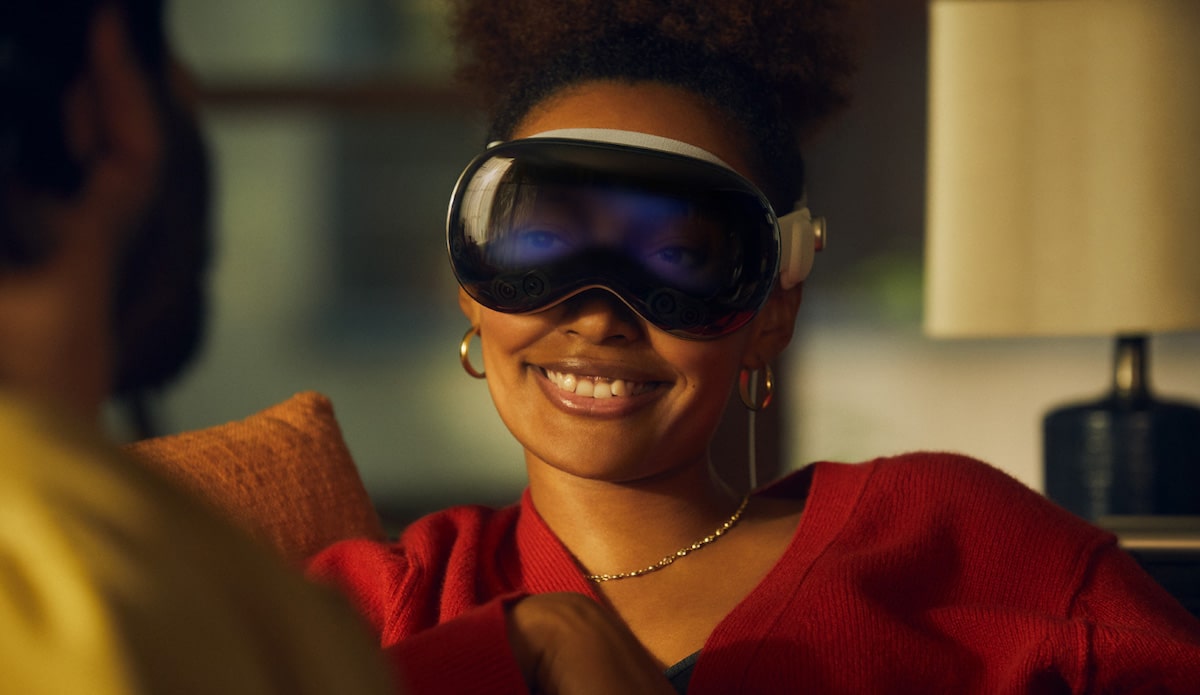
Looking ahead, Apple seems to be balancing short-term refinement with longer-term strategy. Analyst Ming-Chi Kuo expects a significantly lighter Vision Pro to arrive in 2027, along with Apple’s first smart glasses. These glasses reportedly won’t have built-in displays and are expected to support music playback, video recording, and hands-free control. That would put them in direct competition with Meta’s Ray-Bans.
Even though Apple has historically avoided major acquisitions, it’s actively pursuing smaller ones to support its product goals. “We’ve acquired around seven companies this year,” said Cook. “That’s companies from all walks of life, not all AI oriented… We basically ask ourselves whether a company can help us accelerate a roadmap. If they do, then we’re interested.”
For now, Vision Pro remains an expensive, experimental product. But Apple’s continued investment — both in visionOS and in future hardware — suggests that it’s not treating the headset as a one-off. The long game is clearly still in play.