WhatsApp is working on support for third-party AI agents directly within the app, with messages to those agents not end-to-end encrypted and developer access to all conversation content.

The feature, reported by WABetaInfo, is currently in beta on Android 2.26.35.3 and available to a very limited number of users in select countries. Users can connect up to five custom bots or AI assistants to dedicated chats without needing a separate website, app, or browser extension, but they sacrifice the privacy guarantees that define standard WhatsApp peer-to-peer messaging.
How To Connect An Agent To WhatsApp
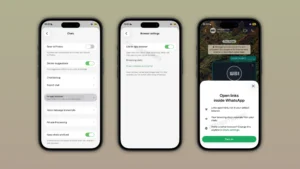
Users enable agents through a new settings screen in the app. The process starts by entering a name for the agent and choosing a profile photo, which appear in the chat list for easy recognition. WhatsApp then generates an API key that users must copy and paste into the third-party service where their agent is hosted. The exact steps depend on the platform, but most agent services provide a dedicated field for the key. Once connected, users open the agent conversation in WhatsApp and communicate directly with it. If needed, users can generate a fresh API key from the same settings screen at any time to reset the connection.

The Privacy Trade-Off
This is where the feature diverges sharply from WhatsApp’s core identity. Standard WhatsApp messages between people remain fully end-to-end encrypted; only the conversation participants can read or hear them, and neither WhatsApp nor Meta can access the content. Agent chats work differently.
WhatsApp considers messages with agents secure in transit, but not end-to-end encrypted in the traditional sense. The agent developer receives full access to all messages as part of running the service. For users accustomed to WhatsApp’s privacy-first reputation, this is a step change as it mirrors how most AI services operate as your conversation data flows to the company running the model.
Why This Matters For The Broader AI Landscape
Until now, WhatsApp’s stance on third-party bots was hostile. Users attempting to connect custom AI agents risked account suspension. Telegram, by contrast, embraced bot integrations and became the primary platform for users experimenting with AI automation, whether running agents locally or in the cloud.
WhatsApp’s native agent support will be an important shift and could fragment Telegram’s advantage, especially given WhatsApp’s 2 billion user base. The setup friction, generating API keys, managing up to five separate agents, configuring each via an external platform, appeals to power users but may confuse mainstream users accustomed to frictionless integrations. Still, native support eliminates the previous all-or-nothing risk of account bans.



1 comment