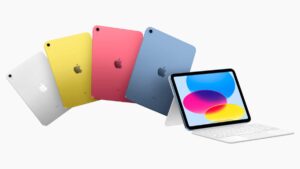
BOE is pushing to secure a secondary supply role for Apple’s next iPad Air OLED upgrade, with Samsung Display holding the primary position and a qualification decision expected before year-end, according to reporting from The Elec. The Chinese manufacturer is ramping activity at its B12 fab in Chongqing, which houses a sixth-generation OLED line sized for iPad Air panels, ahead of an anticipated H1 2027 launch.

As reported by The Elec, the timing is tight as Apple typically finalizes supplier approval one to two months before mass production begins, and Samsung Display is already on track to start ramping toward the end of 2026 or early 2027. That leaves BOE roughly until November or December to pass Apple’s qualification process, with samples currently under evaluation. If BOE’s panels don’t clear that window, Samsung will supply the entire initial production run alone.
BOE’s use on Apple Lines Has Nearly Halved Since 2024
BOE’s position as an Apple supplier has deteriorated sharply. Its use rate on Apple-dedicated OLED lines dropped from approximately 82% in 2024 to around 48% earlier this year, as Apple has been shifting toward Samsung Display for the OLED iPad mini. BOE has supplied OLED panels for iPhone, but cracking the larger-format tablet segment has proven consistently difficult; Samsung Display and LG Display have held that ground, and BOE has not meaningfully broken in.
Landing even a secondary allocation on the iPad Air would reverse that trajectory and give BOE a foothold in mid-size OLED tablets, a category Apple is actively expanding. The iPad Pro’s OLED display set the precedent, and the next-generation iPad Air represents the mid-tier entry point into that transition. Every new model that converts from LCD is a fresh procurement contest BOE needs to enter and win to stay relevant as an Apple supplier.
What the iPad Air OLED Transition Means for the Supply Chain
For Apple, qualifying a second supplier is standard risk management. Sole-sourcing a display for a high-volume product like the iPad Air creates use problems and supply-chain fragility; a second qualified vendor provides pricing pressure and a fallback if Samsung encounters yield or capacity issues. That dynamic is why BOE is worth qualifying at all, even if its volumes end up considerably smaller than Samsung’s initial allocation.
Apple’s display quality requirements mean BOE panels would need to match Samsung’s output closely enough to ship in the same product without visible difference, which is precisely what the qualification process is designed to verify. Where it matters is on price and availability: a successfully diversified supply chain is one reason Apple can hold iPad Air pricing relatively stable even as it moves to more expensive OLED technology. The iPad mini 8 rumors illustrate how Apple has managed that same dynamic across its tablet lineup.
Whether BOE can demonstrate sufficient yield consistency at the B12 fab over the next four months is the only question that matters now. Apple’s qualification process is not lenient, and BOE’s recent use numbers leave the company with limited margin for error; a second consecutive missed entry point would put BOE’s Apple tablet ambitions on hold until the next product cycle.